
Car flood damage checks matter most in the first hour after your vehicle has been through deep water, because the wrong move – usually turning the key – can turn a drying-out job into a replacement engine. Whether you splashed through a flooded underpass or came back to find your car sitting in rising water, this guide walks you through what to inspect, what never to do and when to hand over to a professional. We also cover how to recognise a flood-damaged used car before you hand over any money.
Table of Contents
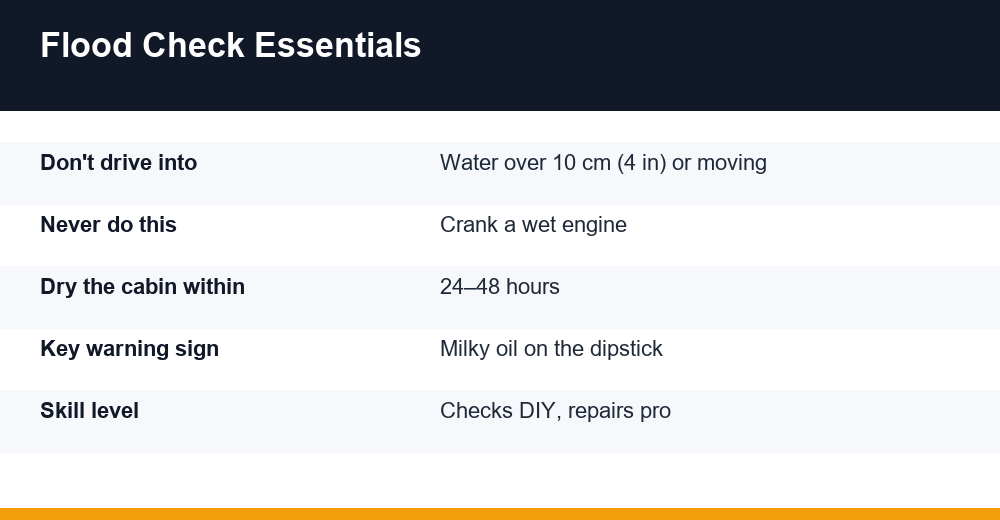
How deep is too deep? Water levels and risk
Floodwater rarely looks as dangerous as it is. The UK’s Environment Agency advises drivers not to enter water that is moving or more than about 10 cm (4 inches) deep. Around 30 cm (1 foot) of flowing water can move a car, and roughly 60 cm (2 feet) can float most family cars.
Depth is also hard to judge from the driver’s seat, and a flooded road may hide a missing drain cover or a washed-out surface. The safest choice is almost always to turn around and find another route.
The real danger to your engine is the air intake. On many hatchbacks and saloons (sedans), it draws air from low down behind the front bumper or grille, sometimes at knee height or below. Drive into water above that level, or create a bow wave by going too fast, and the engine can swallow water instead of air.
Use the table below as a rough guide to what the water level means for your car. Heights vary a lot between models, and if your vehicle has an official wading depth, it will be listed in the owner’s manual.
| Water reached | What’s at risk | Your next move |
|---|---|---|
| Shallow, under about 15 cm (6 in) | Wet brakes, splashed electrics, debris in the undertray | Dry the brakes gently and do the basic checks |
| About 15–30 cm (6–12 in), up to the door sills | Wheel bearings, gearbox and axle breathers, starter motor, lower sensors, exhaust, low-mounted air intakes | Full checks, fluid inspection, book a garage look-over |
| Into the cabin, or above about 30 cm (12 in) | Carpets, seat wiring, control modules, airbag sensors, air intake | Do not start the engine; arrange recovery and call your insurer |
| Dashboard or bonnet (hood) level | Almost every system; often an insurance write-off | Do not start or charge anything; insurer and recovery only |
| Any depth of salt or brackish water | Fast corrosion of metal parts and electrical connectors | Treat it as serious and get a professional inspection |
What not to do after deep water
Most expensive flood damage is made worse in the minutes after the car stalls, not by the water alone. Avoid these instinctive reactions:
- Don’t restart a stalled engine. If the engine cut out in water, assume it has swallowed some. Water cannot be compressed, so when a piston rises against it, something has to give – usually a connecting rod, which bends. This is called hydrolock, and a single attempt to crank the engine can be enough to wreck it.
- Don’t jump-start, bump-start or tow-start it. All three turn the engine over just like the key does.
- Don’t wade into floodwater to reach the car. Around 15 cm (6 inches) of fast-moving water can knock an adult off their feet, and floodwater often carries sewage, fuel and hidden debris. Wait until the water has gone down.
- Don’t keep driving to “dry it out”. A car that still runs may have water in its oil, gearbox or brakes that will cause damage over the next few miles.
- Don’t clean up before recording the damage. Take notes and pictures of the waterline for your insurer before you remove mats or silt.
The 10 essential car flood damage checks, step by step
Work through these car flood damage checks in order, with the car parked on firm, level ground and the engine off. The first steps tell you whether it is even safe to start the engine. Anything involving lifting the car, the brakes, the fuel system or high-voltage parts belongs with a qualified mechanic, and your owner’s manual always takes priority over general advice.
Step 1: Find the waterline
Look for a tide mark of silt or grime on the bodywork, door panels and engine bay. Lift the boot (trunk) floor and check the spare-wheel well, which often collects water first. Leaves or mud packed into the grille and radiator show how high and how forcefully the water reached.
Step 2: Check the air filter and intake
On many cars the air filter box opens with a few clips. If you can open it easily, look for a damp or soggy filter, droplets inside the housing, or silt in the intake pipe. Any sign of water here means the engine should not be started. Have it recovered to a garage, where the spark plugs or injectors can be removed and the cylinders cleared properly.
Step 3: Pull the dipstick
Engine oil should look amber to dark brown and smooth. If it looks milky, frothy or like milky coffee, water has got into the engine. An oil level noticeably higher than normal is another warning sign. Either way, don’t run the engine; the oil and filter need changing and the engine needs checking first.
A small smear of creamy residue under the oil filler cap can be ordinary condensation from short winter trips, so treat the dipstick as the more reliable guide.
Step 4: Look at the other fluids
Gearboxes and axles have small breather vents that can draw in water when hot parts plunge into cold water. Checking them usually means raising the car, so leave that to a garage. You can glance at the coolant and brake fluid reservoirs for cloudiness or rising levels. If the fuel filler was underwater, tell your mechanic.
Step 5: Dry and test the brakes
After shallow water, wet brakes are normal and usually recover quickly. On a clear, quiet road, drive slowly, below about 10 mph (16 km/h), and press the pedal gently a few times to dry the pads and discs. They should feel normal again within a short distance.
If the car pulls to one side, the pedal feels soft, or you hear grinding, stop and get the brakes inspected. Deeper water can push grit into the calipers and speed up corrosion, so the usual signs your brakes need replacing can appear sooner than you’d expect. Brakes are not a DIY job after a flood.
Step 6: Test the electrics
Only do this if water stayed below the cabin floor and you have ruled out water in the engine. Switch the ignition on without starting, then try the lights, indicators, wipers, horn, windows, central locking and infotainment. If you notice flickering, dead switches or a burning smell, switch off straight away and leave the diagnosis to an auto electrician.
Pay close attention to the instrument panel as you switch on. If an unfamiliar symbol appears, check what each dashboard warning light means. An airbag warning light after a flood is a job for a professional, because airbag sensors and wiring often sit under the seats, right where water collects.
Step 7: Inspect and dry the interior
Lift every mat and press the carpet. If it squelches, the foam underlay is soaked and will hold water for days. Remove the mats, soak up what you can with towels or a wet vacuum, open the doors and run fans or a dehumidifier.
Speed matters: the US Environmental Protection Agency advises drying wet materials within 24–48 hours to prevent mould. Warm, humid weather speeds mould up, and the same ventilation habits from our guide to car care in hot weather help here. Seats often hide airbag and seatbelt wiring, so removing them is best left to a garage.
Step 8: Check the tyres and wheels
Look over each tyre (tire, if you’re in North America) for cuts or embedded debris, and check the pressures when the tyres are cold. Many cars run somewhere around 30–35 PSI (2.1–2.4 bar), but always use the figures on the door-pillar sticker or in the manual. Over the next few days, listen for a rumble or hum from the wheels, which can mean water has reached the wheel bearings.
Step 9: Look underneath – safely
Kneel beside the car with a torch and look under the sills and bumpers without crawling beneath it. Note torn undertrays, weeds on the exhaust or mud packed around the radiator. Never get under a car held up only by a jack; a full underbody inspection belongs on a garage lift.
Step 10: Road-test gently, then check again
If everything so far looks clean, take a short, gentle drive with the radio off. Listen for new noises, feel for vibration and watch the gauges. Re-check the oil and fluid levels after the first 30–50 miles (50–80 km), and again about a week later, when slower problems such as damp carpets and corrosion start to show.
Electric and hybrid cars: extra caution
Electric and hybrid vehicles are sealed to cope with rain and normal puddles, but prolonged submersion is another matter. US safety regulators have warned that flooded high-voltage batteries can be damaged and present a fire risk, particularly after saltwater flooding, and that a fire can start days or even weeks later.
- Don’t try to start, charge or plug in an EV or hybrid that has been submerged.
- Never touch the orange high-voltage cables or the battery casing.
- Don’t leave it in a garage. If it is safe and practical, keep it outdoors and at least 15 metres (50 feet) from buildings, other vehicles and anything flammable until it has been assessed.
- Contact the manufacturer’s roadside service, a dealer or a specialist trained in high-voltage systems, and tell your insurer it is an electrified vehicle.
- Watch for smoke, hissing, popping sounds or a sweet chemical smell, and call the emergency services if you notice any of them.
Once a professional has confirmed the high-voltage system is safe, the interior and 12-volt electrical checks above still apply.
Flood damage that shows up weeks later
Some flood damage is slow. Water trapped in connectors, under carpets or inside sealed components can take weeks to cause faults, which is why it pays to repeat your car flood damage checks a week or two after the event. Keep an eye out for the symptoms below.
| Symptom | Likely cause | What to do |
|---|---|---|
| Musty smell or windows that keep misting up | Wet underlay, mould growth | Lift and dry the carpets; get them replaced if the smell persists |
| Warning lights that come and go | Corroded electrical connectors | Diagnostic check by an auto electrician |
| Battery keeps going flat | Corrosion causing a short or power drain | Battery and charging-system test |
| Hum or rumble from a wheel | Water in the wheel bearings | Mechanic inspection soon |
| Jerky, slipping or noisy gear changes | Water in transmission fluid | Fluid inspection and change by a garage |
| Soft or spongy brake pedal | Moisture in brake fluid, corroded parts | Stop driving and get the brakes checked straight away |
| Rust on seat runners, screws or pedal brackets | Water sat inside the cabin | Note it for your insurer; check the wiring under the seats |
How to spot a flood-damaged used car
After major storms, flood-damaged cars are often cleaned up and sold, sometimes hundreds of miles (or kilometres) away or even in another country. The same car flood damage checks you’d do on your own vehicle will help you catch them. Look for:
- A musty or damp smell, or heavy air freshener that seems to be covering something up.
- New carpets or seat covers in an otherwise older, well-used car.
- Silt or tide marks in the spare-wheel well, under the dashboard or behind the door panels.
- Grit or staining on the seatbelts. Pull each belt all the way out and check near the end.
- Rust on screw heads, seat runners, pedal brackets and other places that normally stay dry.
- Condensation or a waterline inside headlights, tail lights or the instrument panel.
- Green or white corrosion on connectors under the dashboard and seats.
- Warning lights on the dashboard, or electrical gadgets that work only some of the time.
Next, check the paperwork. In the US, a vehicle history report may show a flood or salvage title brand. In the UK, insurers normally class a car whose interior was soaked as a Category B write-off, which can be broken for parts but must never return to the road. Not every flooded car goes through an insurer, though, and record-keeping and buyer protections vary widely between countries.
The US Federal Trade Commission’s guide on how to steer clear of a flood-damaged car lists the same warning signs and free history checks. Finally, pay an independent mechanic for a pre-purchase inspection. It costs far less than inheriting someone else’s flood repair bill.
When to call a mechanic or your insurer
Any owner can manage the simple checks above, but most flood repairs are a job for a professional. Book a qualified mechanic if any of the following apply:
- The engine stalled in water, or you found water in the air filter or oil.
- Water reached the door sills or got into the cabin.
- The brakes, steering or gear changes feel different from before.
- Any warning light stays on, especially the airbag, ABS or engine light.
- The car is an EV or hybrid and was submerged at all.
- The flood involved salt or brackish water.
As for costs, these are rough, typical ranges rather than quotes. An oil and fluid change after a mild soaking is usually a modest garage bill. Drying and replacing carpets costs more, and electrical repairs can climb quickly. A hydrolocked engine often runs into thousands, and at that point many cars are declared an insurance write-off.
Comprehensive policies often cover flood damage, while third-party-only cover usually doesn’t, but wording varies by insurer and country. Call your insurer before arranging repairs and keep receipts for recovery and drying. Done calmly and in the right order, these checks give your car its best chance of a full recovery.
Frequently Asked Questions
Is it safe to start my car after it has been in flood water?
Not until you’ve ruled out water in the air intake and engine oil. If the engine stalled in water, or the water reached the door sills, don’t start or crank it at all. Have it recovered to a garage, because one turn of a hydrolocked engine can bend its connecting rods.
How quickly can mould grow in a flooded car?
Mould can start growing on wet carpet and underlay within 24–48 hours, and faster in warm, humid weather. Remove the mats, soak up the water, open the doors and run fans or a dehumidifier straight away. If the carpet still smells musty after a few days, it usually needs lifting and replacing.
Will my insurance pay for flood damage to my car?
Often, if you have comprehensive cover, though it depends on your policy and country. Third-party-only cover usually excludes it. Contact your insurer before booking repairs, record the waterline and damage, and keep receipts for recovery and drying. Terms differ widely between markets, so read your policy wording carefully.
Are car flood damage checks worth doing on a used car that looks spotless?
Yes. Flooded cars are often cleaned and resold, sometimes far from where the flood happened. Pull each seatbelt fully out, smell the carpets, look for rust on seat runners and screws, run a history check where available and book an independent inspection. A tidy interior can hide corroding wiring.