
The two bucket wash method is the simplest change you can make to stop adding fine scratches to your paint every time you clean the car. One bucket holds soapy water and the other holds plain water for rinsing your mitt, so the grit you lift off the bodywork ends up at the bottom of a bucket instead of back on the paint. Below you’ll find a budget kit list, nine clear steps, and low-water alternatives for flats and areas with hosepipe bans.
Table of Contents
What Is the Two Bucket Wash Method?
Every car collects a film of road grime: fine sand, brake dust, tyre rubber, pollen and soot. Wash with a single bucket and each dunk of the mitt drops that grit into your only water supply, ready to be picked straight back up. Drag a gritty mitt across the clear coat and you get swirl marks, the spider-web scratches that show up under sunlight or streetlights.
The fix is separation. After each panel, you rinse the mitt in a second bucket of plain water, rub it against a plastic grid called a grit guard sitting at the bottom, and only then reload it with fresh suds. The dirt sinks below the grid and stays there, because the mitt never reaches it.
It isn’t magic. The two bucket wash method lowers the risk of scratching rather than removing it altogether, and technique matters as much as kit: light pressure, a clean mitt and plenty of lubrication from the shampoo. Done well, though, it’s the foundation every other paint-care job builds on.
Who it suits
- Owners with a driveway, garden or shared wash bay and access to a tap.
- Anyone with dark paint, where light scratches show up most.
- People who want a wax, sealant or coating to last as long as possible.
A Budget Kit List That Covers the Basics
You don’t need a garage full of bottles. The table below covers everything for a safe wash, with cheaper substitutes where they genuinely work. Costs are rough, typical ranges in US dollars and vary widely by country and shop, so treat them as a guide rather than a quote.
| Item | Why it matters | Budget option | Typical cost (approx.) |
|---|---|---|---|
| Two buckets, 15–20 L (4–5 US gal) | One for suds, one for rinsing the mitt | Sturdy hardware-store buckets labelled WASH and RINSE | US$5–15 each |
| Grit guard inserts | Trap dirt at the bottom, away from the mitt | Start with one in the rinse bucket, add a second later | US$8–15 each |
| pH-neutral car shampoo | Lubricates and lifts dirt without stripping protection | Any car-specific shampoo; follow the label dilution | US$8–20 per bottle |
| Two wash mitts | One for upper panels, one for dirtier lower areas | Microfibre chenille mitts | US$5–15 each |
| Large drying towel | Absorbs water before it dries into spots | Two medium plush microfibre towels | US$10–25 |
| Wheel bucket and soft brush | Keeps brake dust well away from your paint | An old third bucket and a soft-bristled brush | US$5–20 |
| Hose with trigger nozzle | Pre-rinse and final rinse | Pump garden sprayer or watering can where hoses are restricted | Varies widely |
Two items are worth spending slightly more on: the wash mitt and the drying towel, because they’re the only things pressed against the paint. Thin, cheap microfibre can shed lint and cling on to grit, while a deeper pile releases dirt more readily in the rinse bucket.
What to leave out
- Sponges. Their flat face traps grit against the paint instead of drawing it into the pile.
- Washing-up liquid (dish soap). It’s built to cut grease, so it also strips wax and sealant and can dry out rubber seals and plastic trim over time.
- Old bath towels, or any cloth that has been dropped on the ground.
Before You Start: Weather, Water Rules and Runoff
Hot panels make washing harder. Shampoo dries on the surface before you can rinse it, leaving streaks and water spots, and in hard-water areas those spots can mark the clear coat if they sit for long. Aim for shade, early morning or evening, and panels that feel cool to the back of your hand.
- Hot climates such as the Gulf, much of India, inland Australia and the southern US: above roughly 30°C (86°F), wash and rinse one panel at a time.
- Cold climates: near or below freezing, 0°C (32°F), water can lock up door seals and handles and turn your driveway into an ice rink. Wash earlier in the day and dry the door shuts well.
- Windy or dusty days: grit blows onto wet panels and gets wiped in. Wait for calmer weather if you can.
Local water rules
Rules on home car washing differ by country, state and even local council. In England and Wales, a temporary hosepipe ban stops you cleaning a private car with a hose, but filling a bucket or watering can from the tap is still allowed. Parts of Australia, the US and the Middle East have permanent or seasonal water restrictions, and many apartment complexes ban washing in the car park. Check with your water supplier, council or building management first.
Where the dirty water goes
In many towns, street drains carry rainwater straight to rivers and the sea rather than to a treatment works, so shampoo, brake dust and oily residue travel with it. The US Environmental Protection Agency explains how this kind of polluted runoff from homes and streets is a leading cause of water-quality problems.
Wash on grass or gravel where possible, use a biodegradable shampoo sparingly, and empty dirty buckets into a household drain connected to the sewer, where local rules allow.
The Two Bucket Wash Method in 9 Steps
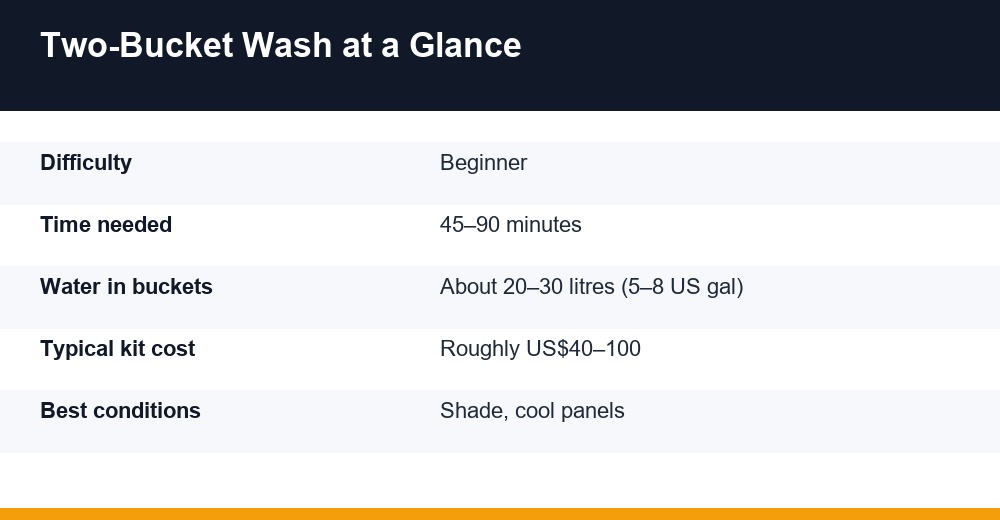
Allow 45 to 90 minutes for a medium-sized car the first time. Check your owner’s manual before you begin, as some vehicles carry specific advice about pressure washing, sensors, soft-top roofs, matte paint or charging ports.
- Park in the shade and let it cool. If you’ve just driven, give the bodywork and brakes time to cool. Close all the windows.
- Set up your buckets. Fill the rinse bucket about two-thirds with plain water and add a grit guard. Fill the wash bucket the same way, add shampoo at the label dilution and agitate it into suds. Lukewarm water is fine.
- Clean the wheels and tyres first. They’re the dirtiest part of the car, so use the separate bucket, brush and mitt and never let those tools near the paint. Our guide on how to clean alloy wheels without damaging the finish covers cleaners and brushes in more detail.
- Pre-rinse the whole car from the top down. The aim is to float off loose grit before anything touches the paint. With a pressure washer, stay at around 1,200–1,500 PSI (roughly 80–100 bar), use a wide 40-degree fan nozzle, and hold it at least 30–45 cm (12–18 in) from the surface. Avoid blasting door seals, badges, chipped paint, sensors and charging ports.
- Load the mitt and wash the roof. Dip the clean mitt into the wash bucket, let it soak up plenty of suds, and glide it over the roof in straight, overlapping lines with very light pressure. Let the shampoo do the work.
- Rinse the mitt before every reload. After one panel, or half a panel if it’s very dirty, plunge the mitt into the rinse bucket and rub it against the grit guard. Squeeze it out, then go back to the wash bucket for fresh suds. This cycle is the heart of the whole routine.
- Work downwards, cleanest areas first. A sensible order is roof, glass, bonnet (hood) and boot (trunk) lid, upper doors and wings, then the lower doors, sills and bumpers. Switch to your second mitt for the grimy lower third. If the rinse water turns murky, empty and refill it.
- Give it a final rinse. Rinse from the top down. Removing the nozzle and letting a gentle stream sheet over each panel pulls most of the water off with it and leaves fewer droplets to dry.
- Dry straight away. Lay a large microfibre towel flat on the panel and pat it or draw it gently towards you rather than scrubbing. Open the doors and boot to dry the shuts.
After the wash: a quick safety check
Wet brakes can feel a touch less sharp for the first few stops. Pull away gently and test the brakes at walking pace before joining traffic. Any grinding, pulling to one side or a soft pedal that doesn’t clear up is a job for a qualified mechanic, not something to investigate yourself.
While you’re at wheel level, look over the tyres (tires, if you’re in North America) for cuts, bulges or exposed cord, and check the tread against your local legal minimum, which differs by country. If you spot damage, have a tyre specialist inspect it rather than driving on it.
Common Mistakes That Undo Your Effort
- Carrying on with a dropped mitt. If it touches the ground, retire it for the day. Grit lodged deep in the pile will scratch, so keep a spare to hand.
- Scrubbing in circles. Straight, overlapping strokes leave any fine marks running in one direction, where they’re far less noticeable than circular swirls.
- Pressing hard on stubborn spots. Let the shampoo soak for a minute and go again gently. Tar, tree sap and baked-on insects need a dedicated remover.
- Washing over bird droppings. They’re acidic and gritty, and in hot sun they can etch the clear coat surprisingly quickly. Soften and lift them separately first; our guide to removing bird droppings from car paint explains the safe way.
- Using one mitt for wheels and paint. Brake dust contains hard metallic particles. Keep wheel tools completely separate.
- Letting the car air-dry. Mineral spots form fast, especially with hard water or in warm weather.
One honest point: washing won’t remove swirls that are already there. Those need machine polishing, which removes a thin layer of clear coat, so if you’re unsure, it’s worth paying a reputable detailer rather than experimenting on your own paint.
Rinseless and Waterless Washing for Flats and Dry Regions
Most washing guides assume a driveway, a hose and plenty of water. Many owners have none of those: they park in underground garages, rent flats, or live where water is rationed. Two lower-water methods fill that gap.
Rinseless wash
A rinseless wash uses a concentrate mixed into a single bucket of water. It contains polymers that surround dirt and lubricate the surface, so you can wipe a panel clean and dry it without a hose rinse. A typical session uses around 8–12 litres (2–3 US gallons), a fraction of what a running hose gets through: often 20–40 litres (5–10 US gallons) every minute.
- Mix the concentrate at the label dilution and soak several clean microfibre towels or a mitt in the solution.
- Pre-soak the dirtiest areas with a pump sprayer filled with the same mix and give it a minute to work.
- Fold a soaked towel into quarters, wipe one section with a single gentle pass, then turn to a fresh face. Drop used towels into a separate container rather than back into the solution.
- Dry each panel with a plush towel before moving on.
The thinking is the same as in the two bucket wash method: keep dirt away from your clean solution. Some owners add a second bucket of plain water for rinsing a mitt; others prefer the many-towels approach above. Both work.
Waterless wash
A waterless wash is a spray-on product for light dust, fingerprints and pollen between proper washes. Mist a panel, wipe gently in one direction with a folded microfibre towel, and buff with a second, dry one. Use plenty of clean towels.
| Method | Water used (approx.) | Best for | Avoid when |
|---|---|---|---|
| Two-bucket wash | 20–30 L in buckets, plus rinse water | Regular full washes with hose or watering-can access | No drainage, apartment car parks, or a hosepipe ban with no bucket or can for rinsing |
| Rinseless wash | 8–12 L (2–3 US gal) | Light to moderate dirt, flats, water restrictions | Thick mud, heavy sand or caked road salt |
| Waterless wash | Under 1 L of spray product | Dust, pollen and fingerprints between washes | Anything gritty, muddy or salty |
| Automatic or hand car wash | Varies; many sites recycle water | Very dirty cars and underbody salt | Older brush machines if you want to avoid fine scratches |
Desert dust deserves a special warning. Fine sand is very abrasive, so blow or rinse it off with a pump sprayer before any rinseless or waterless wipe.
How Often to Wash and How to Protect the Finish
There’s no single correct interval; climate, parking and mileage all play a part. The ranges below are typical starting points, not rules.
| Conditions | Typical wash interval | What to watch |
|---|---|---|
| Mixed town and country driving, mild climate | Every 2–3 weeks | Pollen, traffic film, tree sap |
| Winter roads treated with salt (UK, northern US, Canada, northern Europe) | Every 1–2 weeks while roads are salted | Rinse wheel arches and sills to slow corrosion |
| Coastal or humid areas (much of South-East Asia, coastal Australia) | Every 1–2 weeks | Salt spray and mould on rubber seals |
| Desert and dusty regions (Middle East, inland Australia) | Dust off weekly; full wash every 2–4 weeks | Abrasive sand; never dry-wipe |
| After long summer trips of 300+ miles (about 480 km) | Within a few days | Insect splatter, which can mark paint in heat |
A layer of protection makes every wash easier, because dirt lets go more readily and water beads or sheets away. Wax, sealant and ceramic coating differ in durability, cost and effort, and our comparison of ceramic coating vs wax vs sealant explains which suits your car, climate and budget. Whatever you pick, a pH-neutral shampoo and gentle technique help it last longer.
Electric and hybrid owners can usually wash as normal; check the manual for any vehicle-specific advice. Keep pressure-washer spray away from charging ports and under-bonnet components, and leave anything involving high-voltage parts to a qualified technician.
Make the two bucket wash method your regular routine, keep a rinseless option for restricted weeks, and save waterless sprays for light dust. That combination keeps most cars looking good in almost any climate.
Frequently Asked Questions
Do I really need grit guards for the two bucket wash method?
They aren’t strictly essential, but they help a great deal for a small cost. A grit guard keeps settled dirt below a grid so your mitt can’t reach it. If your budget only stretches to one, put it in the rinse bucket, where most of the grit ends up.
Can I use washing-up liquid or dish soap to wash my car?
It’s best avoided. Dish soap is designed to cut grease, so it strips wax and sealant and can dry out rubber seals and plastic trim with repeated use. A pH-neutral car shampoo cleans just as well, adds lubrication to reduce scratching, and leaves your protection in place.
Is a rinseless wash safe on a very dirty car?
Only up to a point. Rinseless products handle light to moderate dirt well, but thick mud, caked road salt or heavy sand can still scratch when wiped. Rinse those off first with a hose, pump sprayer or a self-service jet wash, then finish with the rinseless method.
Is it legal to wash my car on the street?
It depends on where you live. Some cities ban washing on public roads or letting wash water reach storm drains, and drought rules may restrict hose use. Apartment buildings often set their own rules too. Check with your council, water supplier or building management first.