
A burning smell from car vents, wheels or the engine bay is one of the few warning signs you can diagnose with your nose before you open a toolbox. The trick is naming the exact odour and noticing when it appears, because a dusty heater and a melting wire both smell “burnt” but call for very different responses. This guide sorts nine common causes by smell type and gives each one a plain stop-or-continue verdict.
Table of Contents
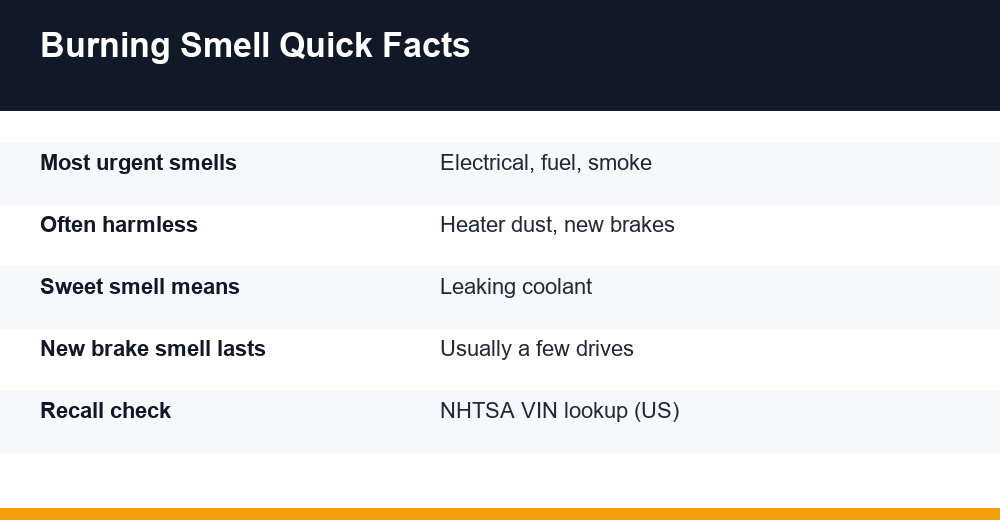
Burning smell from car: stop or keep driving?
Most articles list causes and leave you guessing. A better approach is a simple decision rule you can apply in the first ten seconds, before you know the cause. Three questions do most of the work: Can you see smoke? Is a warning light on? Does the smell get stronger as you keep driving?
- Stop now if you see smoke, smell fuel or a sharp electrical odour, notice the temperature gauge climbing, or the brake pedal feels different.
- Stop soon and check if the smell is strong, comes from one wheel or under the bonnet, and does not fade within a minute or two.
- Keep driving with care if the smell is faint, appeared the first time you used the heater this season, or follows a brake job, and it fades quickly.
That last category covers a surprising share of cases. Heater dust and fresh brake pads are two of the most common harmless sources. Everything else deserves at least a look, and anything involving smoke or fuel deserves your full attention right away.
If you are unsure, treat the smell as serious. Pulling over costs you five minutes. Ignoring an oil leak dripping onto an exhaust manifold or a shorting wire can cost you the car.
The 9 causes sorted by smell type
Use this table to match a burning smell from car parts to the likely cause. The verdict column is the important part: it tells you whether to stop, check soon or carry on.
| Smell | Likely cause | When it shows up | Verdict |
|---|---|---|---|
| Hot rubber | Slipping or misaligned drive belt, hose touching a hot part | Engine running, often with a squeal | Check soon; stop if belt squeals loudly or smokes |
| Hot rubber from a wheel | Tyre rubbing on bodywork, debris on exhaust | While driving, after kerbing or fitting new tyres | Check soon |
| Acrid burnt oil | Oil leaking onto the exhaust or engine | After a drive, at idle, sometimes with blue-grey smoke | Stop and check; do not ignore |
| Sweet, syrupy | Coolant leak (heater core, hose, radiator, head gasket) | Engine warm, inside cabin or from bonnet | Stop if temperature rises; fix promptly |
| Burnt carpet or hot metal | Overheated brakes, sticking caliper, handbrake left on | After hills, hard stops or from one wheel | Stop and let cool; inspect if one-sided |
| Sharp, acrid burnt paper | Slipping or overheated clutch | Hill starts, towing, heavy traffic | Ease off; get checked if it repeats |
| Burning plastic, electrical | Short circuit, melting wiring, failing blower resistor | Any time, often with fuses blowing or lights flickering | Stop now and switch off |
| Dusty, singed | Dust or debris on heater core or vents | First heater use of the season | Usually fine; should fade |
| Melting plastic from outside | Plastic bag stuck to exhaust, loose engine cover | Right after driving over litter or service work | Stop and remove once cool |
Smells that are rarely urgent
A dusty, singed odour from the vents when the heater first runs after summer is usually old dust burning off. New brake pads curing and a bag melted onto the exhaust are also low risk, provided the smell clears up quickly.
Smells that need action today
Electrical burning, fuel, thick smoke and a sweet coolant smell paired with a rising temperature gauge are the ones not to drive on. Burnt oil sits in between: a few drops on a hot manifold are not an emergency, but oil and exhaust heat are a classic recipe for an engine bay fire if the leak grows.
A rotten-egg, sulphur smell is a separate case worth knowing. It usually points to the catalytic converter or fuel mixture rather than something burning, but it still deserves a garage visit soon.
Why does my car smell like burning after driving?
A smell that appears when you park, rather than while moving, usually comes from fluids landing on parts that are still very hot. At speed, airflow carries the odour away. Once you stop, it rises from under the car and drifts towards you as you walk off.
The most common culprit is oil weeping from a valve cover gasket or oil filter and dripping onto the exhaust manifold. It smells acrid and slightly greasy. An overfilled engine after an oil change, or a little oil spilled during the job, can cause the same smell for a day or two until it burns off.
- Burnt oil after parking: look for wet, dark patches on the engine and fresh drips on the ground.
- Sweet smell after parking: coolant escaping under pressure; check the reservoir level once the engine is cold.
- Hot metal near a wheel: a dragging brake that heated up during the drive.
- Faint hot smell with no leak: normal heat soak, especially after motorway runs or towing.
If the burning smell from car vents comes with the temperature needle swinging high and then dropping back, read our guide on a car overheating then returning to normal. That pattern often points to low coolant or a sticking thermostat, and it can explain both the smell and the gauge behaviour.
Never open the radiator or coolant cap while the engine is hot. The system is pressurised, and the fluid can scald.
What a burning rubber smell means
Hot rubber has a distinctive, tyre-shop odour. Under the bonnet it usually means a drive belt slipping on a pulley, which generates friction heat. A seized pulley on an alternator, air-conditioning compressor or tensioner will make the belt drag and smoke.
A slipping belt rarely stays quiet. Listen for a squeal or chirp on start-up, when you switch on the air conditioning or when turning the steering on older hydraulic systems. Our guide to strange car noises helps you tell a belt squeal from a bearing whine or a brake grind.
Other burning rubber sources
- A coolant or vacuum hose that has moved and is resting against the exhaust manifold.
- A tyre rubbing on a wheel-arch liner after fitting larger tyres or hitting a kerb.
- Road debris, such as a strip of rubber or plastic, caught on the exhaust or heat shield.
- Hard launches or wheelspin, which leave a smell that fades within minutes.
Verdict: if the smell is faint and fades, have it checked within days. If a belt is squealing loudly, smoking or you see warning lights for charging or power steering, stop. On many engines the same belt drives the water pump, so losing it can lead to overheating quickly.
Burning plastic smell when the heater is on
There are two very different stories here, and timing tells them apart. A dusty, singed odour the first few times you run the heater after warm months is normal. Dust and pollen settle on the heater core and ducts, then burn off when hot air flows again. It should fade within a few drives.
A sharp, chemical, melting-plastic smell is another matter. In the heater system it often traces back to the blower motor resistor or its connector overheating, or to a blower motor that is working too hard. Signs include fan speeds that stop working, a fan that only runs on full, or a scorched smell from behind the glovebox.
| What you notice | Probable cause | What to do |
|---|---|---|
| Dusty smell, first cold morning | Dust on heater core | Run heater on full for a few minutes; should clear |
| Musty, damp smell | Clogged cabin air filter or mould | Replace cabin filter |
| Sharp hot plastic, fan speeds faulty | Blower resistor or connector overheating | Switch fan off; book a repair |
| Sweet smell, foggy windscreen | Leaking heater core | Fix soon; coolant vapour is unpleasant to breathe |
| Electrical smell, fuses blowing | Short circuit | Stop, switch off, do not keep driving |
A greasy film on the inside of the windscreen with a sweet smell is a strong hint of a heater core leak. Most coolant is based on ethylene glycol, which is toxic, so do not let it linger in the cabin or leave puddles where pets and children can reach them.
If the plastic smell comes from outside rather than the vents, check the exhaust once it is cool. A plastic bag picked up from the road and melted onto the pipe is common, easy to remove when cold, and harmless once gone.
Why your car smells burnt after new brakes
A burnt smell for the first few drives after a brake job is usually expected. New pads carry resins and binders that cure with heat, and the pad material needs to transfer an even layer onto the disc during bedding-in. That process can release a sharp smell and even a little light smoke at first.
Many fitters bed pads with a series of moderate stops from around 30 mph, letting the brakes cool between each. The smell should fade over a few journeys. Follow the pad manufacturer’s own bedding procedure where one is supplied, since compounds differ.
When the smell after a brake job is not normal
- The smell lasts more than a few days or gets stronger.
- It comes from just one wheel, and that wheel is far hotter than the others.
- The car pulls to one side, or you hear grinding.
- The brake pedal feels soft, long or spongy.
A one-sided smell often means a sticking caliper or seized slide pin, which keeps the pad pressed on the disc. Brake fluid or grease contaminating the pads can also cause smoke. Our checklist of signs your brakes need replacing covers the noises and pedal feel that go with these faults.
Outside of a recent brake job, a burnt-carpet smell after a long descent means you have been riding the brakes. Pull over safely, let them cool, and use a lower gear on the next downhill stretch so the engine does more of the work.
Is it safe to drive with a burning smell?
Sometimes, but only after you have ruled out the dangerous causes. A burning smell from car parts you cannot identify should be treated as a fire risk until proven otherwise. That is not alarmism: oil, fuel, coolant and wiring all sit close to components that run hot enough to ignite them.
If you see smoke or flames
- Signal, pull over somewhere safe and switch off the engine.
- Get everyone out and away from the car and from traffic.
- Do not open the bonnet if you suspect a fire; extra air can feed flames.
- Call the emergency services and wait at a safe distance.
- Do not breathe the smoke, which can contain toxic fumes from burning plastics.
If there is a smell but no smoke
- Stop, switch off and let the engine cool before touching anything.
- Check dashboard lights, the temperature gauge and fluid levels.
- Look under the car for fresh drips and note their colour.
- Feel near (not on) each wheel for one that is radiating much more heat.
Manufacturers sometimes recall vehicles because of fire risks, such as faulty electrical modules or parts that can overheat. In the United States you can enter your 17-character VIN at the NHTSA recall lookup to see whether an open safety recall applies to your car. Safety recall repairs are free at an authorised dealer, and many other countries run similar checks through their own transport authorities.
Bottom line: drive on only if the smell is mild, has an obvious harmless explanation, and fades. Everything else goes to a garage, on a recovery truck if needed.
How to trace the source yourself
You do not need special tools to narrow down a burning smell from car systems. You need a methodical approach, a torch and patience to let the engine cool first. Work through these steps in order.
- Note the timing. While driving, at idle, after parking, with heater on, after braking or after a clutch-heavy manoeuvre.
- Note the location. Through the vents, from one corner of the car, from the bonnet or from underneath.
- Check the dashboard. Temperature, oil pressure, battery and brake warning lights.
- Inspect the engine bay cold. Look for oil on the exhaust manifold, wet hoses, crusty coolant deposits, frayed or glazed belts and melted plastic.
- Look underneath. Black or brown drips suggest oil; green, pink, orange or blue suggest coolant; anything stuck to the exhaust is a quick win.
- Check the wheels. After a short drive, a wheel much hotter than the others points to a dragging brake.
- Test the heater. Run each fan speed; if some fail or the smell sharpens on one setting, suspect the blower circuit.
Write down what you find. A clear description such as “sweet smell from the vents after 15 minutes, coolant level dropping” saves diagnostic time and money at the garage.
Prevention habits that cut the risk
- Fix small oil leaks before they reach the exhaust.
- Replace the cabin air filter at the interval in your handbook.
- Avoid riding the clutch or holding the car on a hill with it.
- Use engine braking on long descents instead of constant pedal pressure.
- Have aftermarket electrical accessories fitted by someone qualified.
A burning smell from car components is rarely random. Match the odour, note the timing, apply the stop-or-drive rule, and you will make the right call nearly every time.
Frequently Asked Questions
Is it safe to drive with a burning smell?
Only if the smell is mild, has a clear harmless cause such as heater dust or freshly fitted brake pads, and fades quickly. If you see smoke, smell fuel or hot electrics, notice a warning light or a rising temperature gauge, pull over, switch off and get everyone out. When in doubt, have the car inspected before driving further.
What does a burning rubber smell from a car mean?
It usually points to a drive belt slipping on a pulley, often with a squeal, or a hose resting against a hot exhaust part. A tyre rubbing on the arch liner or debris caught on the exhaust can smell similar. Check soon, and stop if the belt is smoking or charging or power steering warnings appear.
Why does my car smell like burning plastic when the heater is on?
A dusty, singed smell the first time you use the heater after summer is normally old dust burning off and fades within a few drives. A sharp melting-plastic smell, especially with faulty fan speeds, suggests an overheating blower resistor or connector. Switch the fan off and book a repair rather than living with it.
Why does my car smell burnt after new brakes?
New pads contain resins that cure with heat, and bedding-in transfers pad material onto the discs, which can release a sharp smell and slight smoke for the first few drives. It should fade within days. A smell that persists, comes from one wheel or comes with pulling or grinding suggests a sticking caliper.